M50 Engine: Proven Powertrain
Unveiling the M50 Engine: What Sets This Iconic Powerhouse Apart?
The iconic M50 engine, a benchmark of BMW's engineering, has carved a niche in automotive history since its debut in the beginning of the 1990s. Its unique fusion of performance, efficiency, and groundbreaking engineering has captivated both general motorists and hardcore performance aficionados without distinction. Yet, what truly distinguishes the M50 from other engines in its class? Examining its distinctive features and practical uses reveals a complex narrative that goes beyond mere numbers.
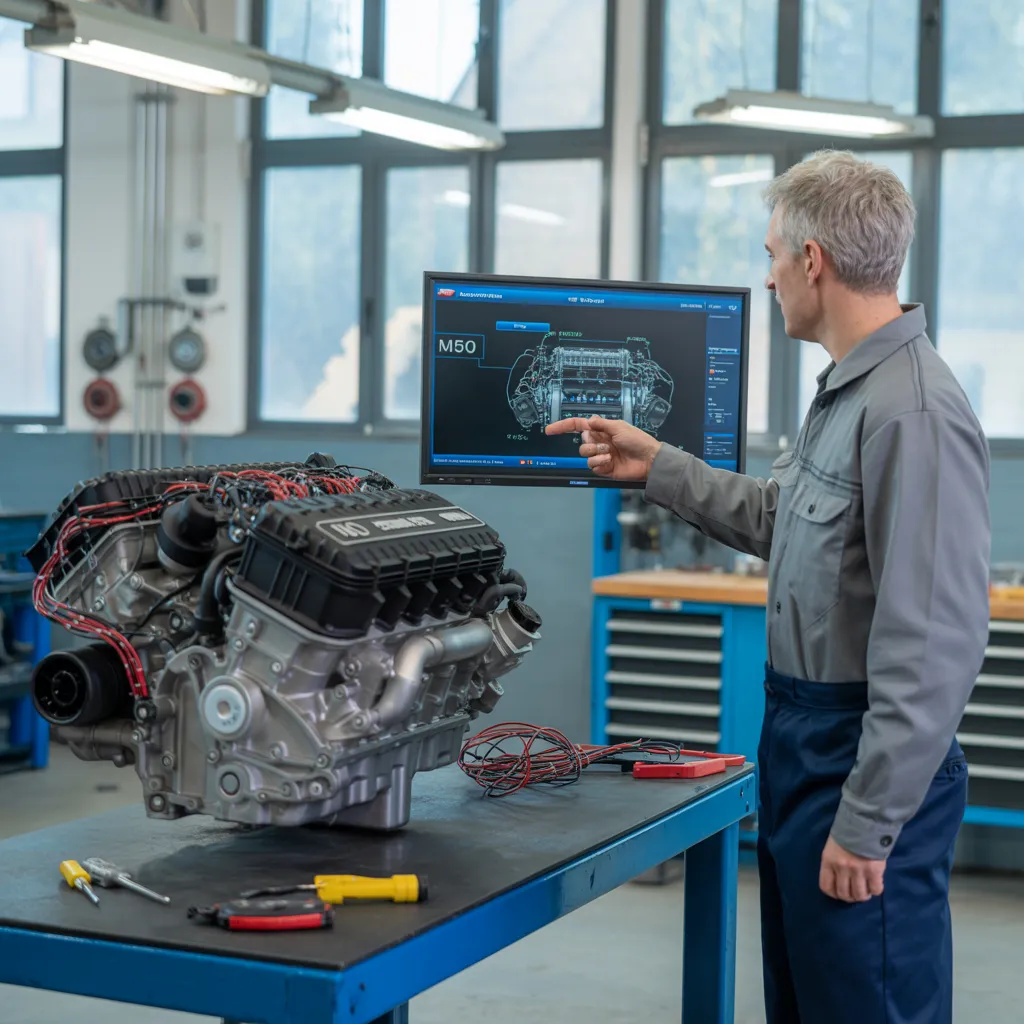
The Legacy of the M50 Engine in Automotive History
The M50 powerplant , a cornerstone of BMW's automotive heritage, has significantly shaped automotive performance and design since its debut in the beginning of the 1990s. Celebrated for its inline-six configuration, the M50 blended seamless performance with outstanding power delivery, establishing a new standard in its segment. This engine marked a shift towards advanced engineering solutions, featuring an aluminium construction and a DOHC layout that enhanced both durability and performance.
The M50's advanced engineering attributes, like its variable valve timing system, played a key role in its recognition for reliability and responsiveness. It was installed in numerous BMW models, from the 3 Series to the Z3, creating an enduring legacy within BMW's lineup. BMW fans commended the M50 not only for its performance but also for its tunability, which encouraged the growth of a robust aftermarket community. Consequently, the M50 engine continues to stand as a revered testament of BMW's dedication to precision engineering and performance-focused innovation within the broader scope of automotive history.
Essential Specifications: What Makes the M50 Stand Out?
Engine specifications reveal the M50's unique qualities that distinguish it from its competitors. This inline-six engine offers a displacement of 2,494cc, providing a combination of strength and efficiency. Significantly, the M50 utilizes a important resource DOHC (dual overhead camshaft) design, optimizing airflow and boosting output at elevated engine speeds. With an output of around 189 hp and 170 lb-ft of torque, it offers robust acceleration and responsiveness.
The M50 also incorporates a advanced Bosch Motronic engine management system, optimizing fuel delivery and ignition timing for maximum performance. Its aluminum construction enables a streamlined weight distribution, greatly benefiting handling and performance. Additionally, the engine's relatively low center of gravity strengthens vehicle stability, making it a preferred selection among automotive enthusiasts. These characteristics underline the M50's reputation as a well-rounded powerplant, providing a fusion of durability and dynamic driving pleasure that resonates with both everyday motorists and dedicated enthusiasts equally.
Performance Comparison: Where Does the M50 Stand?
Upon examining the M50 engine's capabilities, critical measurements involve power delivery, torque behavior, and overall efficiency. Comparing these factors against competing engines will highlight the M50's strengths and weaknesses. This assessment is designed to deliver a comprehensive understanding of its market standing in the industry.
Power Production Comparison
Power output functions as a key benchmark in evaluating the performance of the M50 engine against its competitors. The M50, known for its robust engineering, typically delivers between 140 to 200 horsepower, depending on the specific variant and tuning. This power band positions it competitively within its class, frequently exceeding similar engines from rival manufacturers. For instance, when measured against the popular inline-four engines, the M50's power output offers a notable edge, allowing for improved acceleration and enhanced performance. Furthermore, the engine's construction supports a seamless power output, elevating the performance behind the wheel. Overall, the M50 distinguishes itself not just for its raw power figures but also for its capacity to convert that output into agile, precise performance in real-world driving.
Torque Performance Analysis
When assessing the torque properties of the M50, it becomes evident that this engine displays remarkable performance metrics when measured against its rivals. The M50 is built to generate strong torque over an extensive RPM band, contributing to superior responsiveness and drivability. This quality enables effective acceleration, specifically within mid-range power delivery, a vital aspect for both everyday driving and spirited performance. Measured against similar engines in its class, the M50 often outperforms them regarding maximum torque delivery, reinforcing its reputation as a versatile powerhouse. Additionally, the engine's seamless power curve guarantees uniform power distribution, making it a favored choice for both enthusiasts and daily drivers, continually reinforcing its position in the competitive landscape.
Performance Metrics Assessment
The M50 engine excels in torque characteristics while also showcasing impressive efficiency metrics that boost its overall value. With an enhanced fuel consumption rate, the M50 stands out in its class, offering a harmony between performance and fuel savings. Relative to competing engines, the M50 offers superior thermal efficiency, translating to reduced emissions and lower operational costs. Its advanced fuel injection system contributes to precise combustion, maximizing power output while minimizing waste. Furthermore, the engine's streamlined design helps improve fuel efficiency, rendering it an ideal option for both driving enthusiasts and environmentally aware motorists. Ultimately, the M50 engine's efficiency figures cement its standing as a premier powerhouse in the automotive world, demonstrating ingenuity and real-world usability.
What Upgrades Improve the M50's Performance?
Cutting-edge design drives the M50's engineering advancements, creating a new milestone in the vehicle manufacturing sector. Innovative features such as advanced fuel injection systems and turbo-assisted power substantially improve the engine's performance and output capacity. The incorporation of high-strength lightweight composites reduces overall weight, contributing to superior acceleration and control. Furthermore, a state-of-the-art electronic control unit fine-tunes engine performance dynamically, ensuring maximum performance under varying conditions.
The M50's engineering also includes advanced thermal management solutions, which assist in maintaining superior performance throughout extended usage. Improved combustion mechanisms minimize emissions while preserving horsepower and torque levels. Additionally, the engine's adaptable structure allows for easier upgrades and maintenance, providing flexibility for upcoming developments. Collectively, these breakthroughs establish a powerful engine that not only meets exceptional performance standards but also establishes an ecological benchmark in contemporary engine engineering. The M50's advancements exemplify how state-of-the-art engineering can transform vehicle performance.
How Is the M50 Engine Used in Real-World Applications?
The M50 powerplant showcases its flexibility through its applications in both competitive racing and daily use. In motorsport, its performance enhancements offer drivers with the performance and agility needed for high-speed challenges. Meanwhile, in everyday driving, the motor provides a blend of performance and reliability, making it a popular choice among daily commuters.
Motorsport Performance Upgrades
Leveraging its sturdy design and flexible performance, the M50 engine has made a mark in numerous motorsport applications. This motor thrives in both amateur and professional racing circuits, offering consistency and flexibility that racers and crews value. Its compact design and superior air management improve acceleration, making it a sought-after choice for track events and drift competitions. Upgrades such as forced induction and performance intake components further amplify its horsepower, enabling competitive edge on the racetrack. Furthermore, the engine's flexibility allows for integration in varied platforms, from rally vehicles to touring cars. Overall, the M50's proven performance and ease of modification contribute to its status as a highly regarded engine among motorsport racers seeking to maximize their racing potential.
Common Driving Experiences
A large number of drivers recognize the M50 engine for its balance of capability and everyday usability in daily driving conditions. The engine's fluid acceleration and agile handling make it well-suited for navigating city streets, where quick maneuvers are often required. Its capability to sustain economy without compromising power lets drivers relish dynamic drives while maintaining reasonable fuel efficiency.
Additionally, the M50 engine is often found in various models, from traditional sedans to sleek coupes, providing versatility across diverse driving preferences. Its sturdy build provides reliability, establishing it as a preferred option for those seeking longevity in their vehicles. In everyday use, the M50 engine finds the perfect blend of dynamic driving experiences and the rigors of daily commuting, cementing its standing among the average motorist.
Common Upgrades for the M50 Engine Performance Enhancement
Boosting the performance of the M50 engine encompasses several common modifications that hobbyists commonly seek out. One common upgrade is the installation of a performance air intake, which optimizes air delivery, resulting in better combustion and increased horsepower. Furthermore, a large number of owners install aftermarket performance headers, which increase exhaust efficiency and decrease exhaust resistance, consequently enhancing overall engine performance.
Another popular modification is remapping the ECU, allowing for optimized fuel delivery and ignition timing tailored to aftermarket components. Upgrading the exhaust system is also a favored choice, as a more free-flowing system can significantly improve sound and performance.
Finally, performance enthusiasts regularly consider adding aftermarket camshafts, which can boost power delivery across all RPM levels. As a whole, these improvements not only optimize the M50 engine's performance but also lead to a more rewarding experience on the road, making it a favored option for driving enthusiasts hoping to maximize the engine's full capabilities.
Why Car Enthusiasts Are Obsessed With the M50 Engine?
What makes car enthusiasts drawn to the M50 engine? This legendary engine, engineered by BMW, captures enthusiasts' hearts due to its mix of performance, durability, and customization potential. The M50's straight-six layout delivers smooth power delivery and robust torque, making it a top choice for road and racing use. Its straightforward design enables straightforward upkeep and upgrades, appealing to DIY aficionados.
In addition, the M50 engine provides a impressive aftermarket support, presenting a variety of options for enhancements, from turbo kits to performance intakes. This versatility enables car lovers to tailor their vehicles to their specific preferences, whether they want daily drivability or race-ready performance. In addition, the M50's renown for durability guarantees that it can handle the challenges of high-performance applications. Collectively, these features cement the M50 engine's status as a cherished choice among auto aficionados, nurturing a loyal community around it.
Common Questions and Answers
What Vehicles Originally Featured the M50 Engine?
The M50 powerplant was originally found in various BMW models, such as the 325i and 525i during the 1990s. Its adaptability enabled it to be used in both sedans and sports cars, improving performance throughout the lineup.
How Does the M50 Compare to Newer Engines?
The M50 engine, while respected for its reliability and performance, falls short of the technological progress and efficiency found in modern engines. Advancements in turbocharging, fuel delivery, and hybrid technology have markedly enhanced power and fuel economy in modern vehicles.
What Is the Typical Lifespan of an M50 Engine?
The average lifespan of the M50 engine falls between 200,000 and 300,000 miles given adequate maintenance. Factors such as operating conditions, driving habits, and maintenance frequency greatly influence its overall performance and longevity.
Are There Common Issues With the M50 Engine?
Typical concerns with the M50 engine involve oil leaks, cooling system failures, and VANOS unit malfunctions. Owners often report issues associated with intake manifold gasket failures and wiring harness deterioration, affecting both performance and long-term reliability.
How Much Does It Cost to Maintain an M50 Engine?
The servicing cost for the M50 engine usually runs from $300 to $1,000 per year, influenced by considerations like usage, required repairs, and whether routine services or major overhauls are needed for top performance.